Showing posts with label cattle. Show all posts

Wednesday, December 19, 2012

Kohlhaas Cattle Co., Iowa

We are excited to feature one of our recent cattle website designs, Kohlhaas Cattle Co. of Lu Verne, Iowa.

The Kohlhaas family came to us earlier in 2012 because they really liked the work we had done for lots of other Iowa club calf producers, and also the website we had just done for Cyclone Trace.

And, no surprise, when we got the design instructions for KCC, guess what their design preference was....Red and Gold, Iowa State colors.

We love working with customers of all backgrounds, but family farms are always special to us. Kohlhaas Cattle Company is a 3-generation family cattle and grain farm. Their business began in 1989, when they bought their first club calf for a 4-H project at the Kossuth County Fair.

Like many others in the business, once they had that first calf, they were hooked. The Kohlhaas's said that that first calf ignited a passion within their entire family and motivated them to work harder each year to grow their success in the show cattle industry.

I guess if you had to say what is the most unique thing about this family, it would be their niche in market heifers. They are pretty much the experts on market heifers. In fact, they have exhibited FOUR grand champion market heifers at the Iowa State Fair and also two reserve grand champion market heifers at the Iowa State Fair. So yeah, they are the people that when you see them in your class, you are silently bummed because you know they'll be so hard to beat!

Since that first calf in 1989, more than 20 years ago, KCC has developed a respected program with proven consistency in the show ring. They use their experiences from what they learned while showing all those champions to help their clients.

This really was an awesome group to work with -- and I hope you will check them out at http://kohlhaascattleco.com.

And yeah, if you are in the market for a market heifer -- you know where to go!

Wednesday, August 8, 2012

Moore Land & Cattle :: Jerseyville, Illinois


We love working with family businesses in the cattle business and our newest website is a great example of families working together and having a great time!

We made contact with Moore Land and Cattle through an old Shorthorn / MSU connection with our good friend Robbie Duis, who is now working at Moore Land & Cattle.

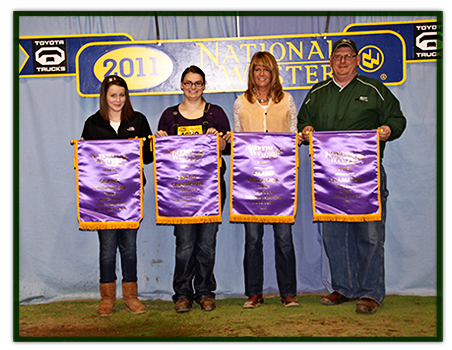
And, just check out this picture! Isn't it awesome! It's not every day that you can find four purple banners from the Denver stock show! WOW!

The Moore operation is located in Jerseyville, Illinois, and includes mostly Simi and Maine cattle, but they also have Angus, Shorthorn, Charolais, and some club calves. The Moore's will be hosting their fall production sale on October 6th. They are about an hour and a half from Illinois State Fair and they are inviting anyone to come out and look at the calves while you are at the fair.

This is an awesome family, and we are honored to do their website. Check out all of their winners at http://moorelandandcattle.com/winners.html...you will quickly recognize some of the recent greats in the Shorthorn and Maine and Simi breeds.

Thanks to the Moore family for choosing RHD!!!

Tuesday, August 7, 2012

3K Land & Cattle :: Texas Red Angus Breeders

Word of mouth referrals is one of the biggest ways we get new clients at RHD, and that is sort of how we first developed a relationship with 3K Land & Cattle.

For many years, we have handled the website for the Texas Red Angus Association. During this time, we made a friendship and working relationship with Judy Kay Ferguson, who volunteered for TRAA on their website. Through working with her on that site, we made contact and enjoyed working with this volunteer who was always organized and pleasant to work with.

Recently, Judy Kay decided she needed a website for her own ranch, 3K Land & Cattle, and she immediately came to RHD. We loved this project. The 3K site has a very western, ranchy look which is one of our favorite design styles.

3K Land & Cattle is a family owned and operated ranch located in the north Texas town of Drop, Texas. It was originally started by Wayne & Judy Kay Ferguson and originally had crossbred cattle. Wayne and his youngest daughter Brenna went to an auction to purchase "A" show heifer and came back with 13 heifers! Today the ranch is managed by Judy Kay and son-in-law Kyle DeVoe. The DeVoe family lives on the ranch and Kyle manages the day to day operations.

So how did they get the name 3K? It stands for the three females in the family...Judy Kay, Amanda Kay, and Brenna Kay! A family tradition continues with the next 3K generation....Karlee Kay, Kenedy Kay DeVoe and Emerson Kay Owens!

Monday, August 6, 2012

Top 5 Marketing Tools for Club Calf Producers


The fall season is often times the ‘make or break’ time of year for club calf producers. Since most producers use the fall to market their calves, usually the business’s entire year of cash flow can come down to a few days before, during and after the sale. Ranch House Designs, Inc. recommends the following five tools as key to finding success in marketing club calves.

Start With A Quality Product. This is the basic fundamental of success in any cattle operation. Producers must strive to raise high quality cattle that others will desire. In the club calf business, an easy way to do this is to utilize semen from the most popular sires in the busines, which are usually readily available and affordable. In order to be successful, club calf producers should buy the best breeding animals they can afford, and then breed them to the best sire they can afford. Owning quality livestock is a way to continually build and grow your cattle assets over time. Only quality reproduces quality, and as time goes by, the net worth difference between great livestock and mediocre livestock continually becomes larger and larger.

1. Quality Photos and Videos are a Necessity
Just as good cattle are the fundamental to having a good marketing program, good photos and video are the next step. Today’s consumers want to see a photo, and preferably a video, before making a drive to come visit your farm in person. In some cases, especially in online auctions, some buyers may even purchase cattle based on the photo and video alone. For this reason, we recommend hiring a professional photographer or video team to photograph your cattle for your sales.

2. Word of Mouth Advertising
The club calf business is a people business just as much as it is a cattle business. Word of mouth advertising is the most effective means of advertising your cattle.  Personal communication such as telephone calls, texts, a letter, an email, or most effectively a personal visit, help build relationships and strengthen a marketing program. Letting others know about your product should be your #1 job in marketing. Attend shows and talk about your cattle. Share your news with your friends and neighbors. Utilize your marketing network such as semen distributers, customers, and neighbors. Remember the old adage, No Tell = No Sell.

3. Year Round Exposure Through Your Website
By today’s standards, every club calf producer should have, at minimum, a website that can be used as the building block of their marketing program. At it’s basic level, the website is used as a constant online reference for people to find your phone number, contact information, and learn about your program. Every producer should have their own address (i.e. mattlautnercattle.com) and a stand alone site. The website should also be the go-to place that unites all of your online efforts such as social media, email blasts, and blogs. Every club calf producer should also purchase a link on www.showsteers.com that directs the viewer to back to their own site. While once thought of as a high tech marketing tool, today a website is a basic requirement for all marketing efforts in the club calf business.

4. Social Media, Blogs & Email Advertising
Once club calf producers have their own website established, it is now necessary to take your online advertising to the next level by integrating social media, blogs, and email blasts into your online mix. Online advertising is affordable, sometimes even free, and reaches the mass public instantly.

Facebook, twitter, and blogs are three very common marketing tools currently being used by club calf producers, but may be viewed as challenging by older producers. This is a great opportunity to involve wives and children in the farm’s marketing efforts.

Blogging is also a useful tool, but may not be for everyone. Even if you do not blog personally, producers should take advantage of the blogs of others in the club calf business. Many farms and bull owners have blogs where they gladly feature their clients photos free of charge. Producers should most definitely take advantage of this shared marketing exposure.

Email blasts are also crucial in promoting club calf sales. Generally email blasts costs less than $300 and reach tens of thousands of producers. The ideal email blast strategy should include 2 email blasts. The first should go out approximately 2 weeks before the sale, or as soon as photos of the sale offering are posted on your website. The second blast serves as a reminder of the sale and should go out approximately 3-5 days prior to the event. If a producer uses online sales, a third blast should be sent the day that the online auction closes as a final reminder.

5. Print Advertising During Key Times of the Year
Print advertising, though expensive, is still considered a marketing must due to the exposure given during select times of year. RHD recommends advertising during key times of year in relation to your marketing schedule. For example, if you host a fall sale, you must advertise in the August show publications of your choice. If you sell semen on club calf bulls, spring advertising is a necessity.

Good print ads include excellent photos, usually taken by a professional, and pertinent information such as sires represented and sale information. When there are 300 other ads in a magazine, you must do an excellent job of convincing the reader why they should pick your farm above the other 299 ads in the magazine.

Most club calf producers will find that 1-2 ads per year will give them the exposure needed. However, simply running an ad alone won’t get the job done. The print advertising should be one part of the total marketing efforts. Producers should have their website in place prior to running a print ad so that the website URL can be boldly referenced in the ad for readers to access for more information. The print ad should also be email blasted as the sale date approaches.

Putting it All Together
A good rule of thumb is that a club calf producer should prepare to spend 1 to 5% of their gross annual sales in advertising, with the website being the most important tool in the marketing mix. Successful marketing involves planning, implementing, maintaining, and evaluating. For more on marketing, we recommend purchasing the Livestock Merchandising book, available at www.ranchhousedesigns.com > Shop.

Thursday, August 2, 2012

Big Jim's Cattle Service :: California


With a name like Big Jim's Cattle Service, you can't help but want to check out this website!

Big Jim's Cattle Service is owned by Jim Vietheer of California, who also is the onwer of HAVE Angus, another RHD website client.

Jim started this business in the late 80’s with hoof trimming services. He purchased a hoof trimming table because he didn’t like to wait for other hoof trimmers to come to him, and he wanted to trim his own way. Over the years it has grown to be a state wide business trimming almost exclusively beef cattle and show cattle.

Later, Jim began selling WW Livestock Equipment and WW Paul Scales. With retirement from his day job in 2008, and the growing sales business, Jim has been able to concentrate on more equipment sales and HAVE Angus. Due to Jim's relationship with Kirby Kelly, Bo Sanders, and Penny Edwards at the WW Paul Scales Division in Duncan OK, he has become a major source in California and beyond.

The third part of this Jim's diversified business is a small amount of custom fitting almost exclusively for the Red Bluff Bull Sale where he takes bulls for producers who either cannot or don’t have the expertise to take their bulls to the sale. Over the last 20+ years he has helped many breeders by allowing them to present and market their product with great success including many breed champions and sale starters.

As you can clearly see, Big Jim loves the agriculture industry and working with cattle people. Check out this great site at http://bigjimscattleservice.com/index.html.


Monday, July 30, 2012

Harlan Ritchie's Brief History of Cattle Type

Earlier this summer while I was in Michigan I had the opportunity to visit with two of my mentors, Dr. Harlan Ritchie and his wife Dr. Leah Ritchie. A few days later Matt Lautner emailed me and asked if I could help him find something really cool to publish in his online handbook for 2012. I immediately thought of a presentation by Dr. Harlan Ritchie that he developed at Michigan State University. I asked Leah if she would mind if we adapted it for this publication and she said go for it! If you missed it in the Matt Lautner online handbook, here is the presentation again.

A History of Types of Show Steers
Adapted from Dr. Harlan Ritchie’s “Historical Review of Cattle Type” presentation,
Distinguished Professor of Animal Science, Michigan State University

Purple banners are the goal of every person in the club calf business. Every young showman dreams of claiming their spot at the backdrop. Every breeder spends thousands of ours contemplating mating decisions to produce that perfect show steer. Every judge studies and rationalizes each decision in order to select winners that best fit the beef industry.

Since early cattle show competitions of the 1700s, these dreams and visions of purple banners have not changed. However, the cattle being bred to win these banners have drastically changed, evolved, and improved to meet the visual and conformations standards set by both breeders, judges, and the beef industry.

Early History of Cattle Breeding
Early cattle in the United States and Europe were used primarily for draft and milk. They were extremely large framed, late maturing, light muscled, and slow to finish. They were only used for meat consumption purposes when they were too old to work or produce milk.

During the mid 1800s, most cattle in the western U.S. were native cattle that were primarily Longhorn type. After the Civil War, dual purpose Shorthorn bulls were introduced out West and began crossbreeding with the native cattle to improve milk and meat production. Hereford bulls took over in the late 1870s. Angus came later. The Shorthorn, Hereford, and Angus breed associations were formed during 1881-1883 and Polled Hereford in 1900. The British breeds had found their place in the U.S. beef industry.

1867. “Black Prince.” Angus steer. Champion at prestigious Smithfield show at four years of age. Weighed 2200 lb. It was said,“a short man would need a ladder to see his back.”

1900. “Advance.” Grand Champion Steer at the 1st International Livestock Exposition in Chicago. He was 25 mos. old and weighed 1430 lb. The International began in 1900 and ended in 1975. The steer winners were very influential in setting type standards for beef cattle throughout this 76-year period.


1915-16. “Nebraska.” The only record of a male winning as a bull and later as a steer. In 1915, this Angus bull was Champion at Smithfield. He was then castrated and came back to win the Smithfield steer show in 1916. Note that they were starting to put some straw underneath the cattle in photos to make them appear smaller-framed.


20th Century Cattle Breeding
Beginning in the early 1900s through the 1930s, cattle breeders gradually began moving towards breeding smaller framed cattle that were earlier maturing and thicker, in hopes that these cattle would be able to finish at a younger age and lighter weight.

1932. “Campus Model.” Grand Champion Steer, 1932 Michigan State Fair.
He weighed 1150 lbs

1932. “Texas Special.” Grand Champion Steer, International, 1932. He weighed 1240 lbs. at 19 mos.
From the mid-1930s to the mid 1950s, this trend greatly intensified, with breeders, judges, and packers putting a large amount of selection pressure towards producing the earlier maturing, smaller framed cattle. During this time, terms like “baby beef,” “compact cattle” and “comprest cattle” came into use. Show winners across the country were small in frame, usually only reaching the belt buckle of the exhibitor. Advertisements of the early 1950s featured small, “belt buckle cattle” that would classify by today’s standards of less than a frame score 1. One advertisement from 1949 advertised a certain animals as the “biggest bull at the show”…however he was only a frame score 2.0.

1945. “TO Model.” Grand Champion Steer, Denver, 1945.
He weighed 965 lbs. The TO cattle were cextremely small framed and early maturing, and became popular during the early 1940s and 50s.

Beef cattle historians know all too well how this trend ended: dwarfism.  Breed associations and breeders took extraordinary steps to deal with and eventually eradicate dwarfism. Cattle size and type tended to stabilize from 1955 to 1960. During the 1960s, breeders began to select for increased size, but were not able to make much progress with the bloodlines they were using at the time.

Following World War II, consumers began demanding grain-fed beef, thus starting the commercial feedlot industry. However, commercial feed yards were having trouble feeding cattle to an acceptable slaughter weight to grade choice without getting them overly fat. To address this issue, U.S.D.A. initiated yield grading in 1965, and the industry began searching for cattle that could be carried to desired slaughter weights without getting too fat. Enter the Charolais cross steer, who became very popular with breeders, feeders and packers for their rapid gains and high cutability.

1969: A Pivotal Year for The Show Steer Business
The cattle industry was forever changed in 1969. The Hereford, Angus, and Charolais associations began sponsoring type conferences in 1969 to evaluate the performance of cattle that varied in frame size within their respective breeds. These type conferences eventually led to the development of the new U.S. feeder cattle grades, adopted in 1979, which identify visual standards for small, medium, and large frame cattle. Many breed associations also revised their ‘ideal standards’ for frame size to update their standards from the smaller framed models of the 1960s.

At the 1969 International Show in Chicago, Dr. Don Good of Kansas State University selected Conoco, a Charolais x Angus steer, as the grand champion steer of the show. This made Conoco the first crossbred winner of a major steer show of modern times. He weighed 1250 pounds, quality graded Choice, and yield graded 2, and would still be considered outstanding today.
1969. “Conoco.” Grand Champion Steer, International. A Charolais-Angus crossbred steer, the first crossbred winner of a modern major shows.
That same year, Dr. Robert Totusek of Oklahoma State University selected “Great Northern” as the Grand Champion Angus bull of the International Show. Great Northern was a Canadian bull that was larger framed, trimmer, and heavier muscled than any Angus bull of the time.  The selection of these two winners at the biggest show in the nation helped set the new trend in cattle breeding.

Upward Trends in Frame Size Spread like Wildfire
In the early to mid 1970s, there were a number of outstanding champion steers exhibited at the major shows that produced great carcasses on the rail, aligning the show ring with the beef industry. However, size was beginning to get out of control at many steer shows.

1973. Champion Crossbred Steer, International. One of the largest champion steers of that era was this 1460-lb crossbred. Packers began to raise their voices against excessively heavy carcasses coming from cattle of this size.

Some steers of this time were exceptional in their cutability but were too lean and lacked body capacity. By the early 1980s, some show steers were taller than their exhibitors. Many champions at Denver and Louisville during the late 1980s were frame score 10.0 or higher.

1984. Grand Champion Steer, Houston. By the early 1980’s, some champion steers were taller than their exhibitors.

Selection for increased size spread like wildfire from 1960 to 1988. However, four significant events of this time led to the next type change, towards more moderate framed steers, which we still see today.

In January 1986, the National Consumer Retail Beef Study shows that consumers wanted beef that was leaner and lower in fat. In April 1987, Excel meat packers announced new specifications for buying cattle that put more emphasis on muscle thickness. Excel’s specs presented a 1,270 pound steer as being near ideal in his muscle thickness along with enough finish to grade low Choice. In May 1988, the National Beef Conference established recommendations for moderating frame size and increasing muscle thickness in beef cattle. In December 1991, the National Beef Quality Audit revealed numerous shortfalls in the U.S. beef carcasses.

1988. Grand Champion Steer, Denver
Following these recommendations from the industry, steer shows began to also reflect a change in their cattle type. In 1988, the Denver champion steer weighed 1,272 pounds and had an outstanding carcass with .35 inch back fat, a 15.0 square inch rib eye, U.S.D.A. Choice quality grade, and yield grade of 1.8. In 1993, the Houston Livestock Show implemented a slick shear steer show in which cattle could not have more than ¼ inch of hair. Other major shows, especially in the south, followed suit. By 1994, breed champions at Denver had down-sized from frame scores of 10.0 in the late 1980s to frame scores of 6.0 and 7.0.

2012. Grand Champion Steer, Houston  
Today’s Ideal Show Steer
Since 1988, the show steer industry and the entire beef industry has placed increased emphasis on carcass traits and structural soundness. Judges continue to select for cattle that are moderate framed and will finish at an acceptable weight with a high quality carcass. In 2012, the Grand Champion Steer at  Houston had a live weight of 1,288 pounds, graded U.S.D.A. Choice with a yield grade of 2. Though the industry has experienced its ups and downs (no pun intended), it appears that for the last 20 years, cattle type has stabilized with a common goal of  increased emphasis on optimal frame, optimal muscle, and high quality carcasses to meet the demands of the feedlot, packer, and consumer.

 -Adapted by Rachel Cutrer


Thursday, July 19, 2012

Barber Ranch :: Channing, Texas

Oh boy are we excited to post this new website!
We have been working on the new website for Barber Ranch since early spring, and it is one that we are exceptionally proud of. 


We began working with the Barbers back in 2001, and they were one of our first website clients back in the days of "Two Girls Web Design." I had known the Barbers for forever through showing in TCCA. I mean let's be honest, if you're from Texas, and you hear the word Hereford, Barber is one of the first names that comes to mind. Actually, that probably remains true for the whole U.S. When you think of top Hereford show cattle and commercial bulls, the Barbers have an excellent reputation of quality cattle. 


We had done their website from 2001 to 2004, when they decided to switch to another firm. The period of 2003 to 2004 was one where our business was in a transition as I worked for Texas A&M full time. Because of my full time job, most of my website work was done at night and on the weekends, so at that time the Barbers wanted to switch to a company that did web design full time. I totally understood and though we didn't do business together anymore, we were still good friends. 


Back last fall, we began talking with the Barbers again about doing their ads and website once again. They had commented that they loved the work we were putting out and realized that now our business had grown to hold 3 full time updaters and a great team of marketing professionals. And we were thrilled to gain their business once again!


We began working on their sale ads for their Cowtown Classic sale. Emily traveled up to Fort Worth to photograph their sale. Then we began the process of the new website, which went live today.


Their website is one of my all time favorites. I'll admit I have a weakness for good Hereford cattle. Especially ones shown by adorable little girls like this one...


I hope you will visit www.barberranch.com to see our recent work and their great Hereford cattle. Thanks Barber Ranch for coming back to RHD!!!


P.S. Barber Ranch is part of our growing list of high profile Hereford clients. We have even more on the way that will be unveiled throughout the spring and fall! If you are a Hereford breeder we would love to give you a quote. We also have two great Hereford gals on our team if you prefer to talk to one of them. KC Kinder is available at kc@ranchhousedesigns.com or Ashley Middleswarth at ashley@ranchhousedesigns.com.


Wednesday, July 18, 2012

Eaves Angus Genetics :: Oklahoma Angus Website

We always find it enjoyable to work with new Angus clients on their website, and we are happy to present our latest creation: Eaves Angus Genetics


Over the past few months we have seen a tremendous growth in the # of Angus websites we are designing here at RHD, and we are very thankful to the Angus breeders who are choosing to use us for their designs. We are currently doing 34 Angus websites with the list growing every day. 

One of the things we enjoy about working with Angus clients is their passion for education and knowledge. Eaves Angus Genetics is at the top of this list, because they are extremely driven in their quest for performance.  In fact, their motto is EAG: The Prefix for Performance.


Eaves Angus Genetics is based out of Atoka, Oklahoma with the goal to provide bulls to the commercial cattleman containing the genetics that allow them to be profitable. With this goal, owner Ryan Eaves believes in using the total package of information available to best make his breeding and management decisions. He uses all available resources such as performance data, EPDs, index values, and carcass information to offer a sound information base to our clientele. Then, he applies stringent selection criteria to the EAG cowherd focusing on traits like fertility, conformation, and structural soundness. 


After working with Ryan, we quickly learned one thing: He gets it. He gets the beef industry and he realizes that his #1 customer is the commercial cattleman and he works hard to raise bulls that will work for the commercial-man. And that is something we can all appreciate, and relate to in the beef industry!


We hope you will check out Eaves Angus Genetics. Stacey handled the design on this one and Jessica did the content work. We think it's a great design, but also backed with great information and some awesome Angus pictures.  

Tuesday, July 17, 2012

Vansickle Cattle Co :: Indiana

One of our newest websites to go up is Vansickle Cattle Co., a cattle operation in Fortville, Indiana. We began working with the Vansickle's last year by helping them create custom graphics for their blog. They had previously had a website done elsewhere, and when their contract was up with that designer they wanted to switch to RHD because they were so pleased with the service we had offered on the blog design. 
 Working with Dave Vansickle is a joy. We had known of him through social media contacts because we followed him on twitter. We always enjoyed reading his thought-provoking posts and also his humorous posts too! Definiely check out @VCC_Cattle on twitter. 

Just like so many of our customers in the show cattle sector, the Vansickles are a family owned business that works together in everything they do. Dave began the business in 1999. While he was going after the club calf market, Dave is one of those smart cattlemen who also understands there is a material side to this business too. So yes, he works hard to raise high caliber show steers, but he also is just as concerned about the females. Because of this, VCC has become known as a great place to buy show steers and replacement females that can raise those clubby show steers too. 

The folks at VCC aren't 'cattle traders.' They know the business and they put their hearts into everything they do on the farm. Selection, high standards, and planned matings go into the success of VCC. They also match their cattle with a great program of customer service and integrity. Dave loves helping young folks and is happy to help every step along the way. That is one of the reasons we are so proud to work with this new client. 

Check them out at http://vansicklecattleco.com/. If you are in the market for a club calf or a club calf momma, VCC is a place to go!

Wednesday, July 11, 2012

Baughman Show Cattle :: Ohio

At RHD, we take extreme pride in developing long term relationships with our clients, and in many cases we have clients we have handled the advertising accounts of for 10 years or more.

We began working with Baughman Show Cattle about 5 years ago, and the only project we did for them was to design their August ads every August. So once a year, we would hear from the Baughmans, and design their ad, and each time was a great experience.

The Baughman operation started out in 1982 with Jim and Amber Baughman, a brother and sister team that showed in 4-H and FFA. In 1997, Jim started selling cattle and helping other families with their calves. After a few years, in 2000, the younger Jim and his wife Nancy teamed up with Jim, Sr. to start selling cattle on a much larger scale. Things grew even further in 2004 and the Baughmans have continually been selling high quality cattle every year since.

This year, when the Baughmans contacted us again to do their ad, they also asked about a website and a blog. They were currently working with another design firm for their website but inquired about moving everything over to us. We were honored.

The Baughman team already had a blog set up, which they were updating themselves. All they needed was for RHD to do some matching graphics and spruce up the design, so they didn't just have the same old template everyone else did. We were able to do this in a day.

Next, we went to work on their new website, which is now up at http://www.baughmanshowcattle.com. Their annual sale will be held September 11 and will be an online sale this year. We hope you will visit this new site for a great cattle family!

Monday, July 9, 2012

Turkey Feather Ranch :: Ada, OK


If you love Herefords then Turkey Feather Ranch is definitely one of our new websites you will want to check out.

Turkey Feather Ranch was founded in 1957 and since then, has continued a commitment to building a Polled Hereford program of functional and complete cattle.

In 2007, Rindy & Ernie Bacon took over the operation and since that time have been aggressively working on building up the herd through elite donor females and herd sires that are popular throughout the country.

We worked on this site a great deal with their marketing consultant, Paul Maulsby, a good friend of RHD. While working on the site we especially enjoyed seeing the pictures of their herd bulls like STAR TCF Lock N Load, the 2011 National Champion Hereford bull in Fort Worth and 2010 National Champion Bull in Louisville.

Another favorite was STAR Shock-Wave 131Y, the 2012 National Champion in Denver.

So as you can see Turkey Feather Ranch doesn't play around! They are home of 3 past national champions (2012, 2011, and 2010) and their love of the Hereford breed is evident to anyone who visits the site. Check it out! We hope you enjoy!


Monday, July 2, 2012

Proper Cattle Showmanship Attire

Over the past 3 days I have heard more discussion on "What is proper showring attire" than I have heard in the past 3 years. This is mostly due to the creation of Stock Show Wonka...a new twitter handle that is dead-on as far as writing hilarious, but often very true, comments about stock shows.

Back in my day as a junior showman, no one ever thought of me as a fashion trendsetter, or even one of the "hottest" girls on the junior show circuit by any means. But they did think of me as a darn good showman, and I'm proud to say I won multiple national showmanship titles in two breeds (Brahman & Shorthorn). I think Blake Bloomberg can top me and say he was champion showman of three breeds, but I don't think there are many other people out there who can claim those honors. 

So what is proper showring attire? According to StockShowWonka, (whoever that is) it isn't Wranglers, isn't a cowboy hat, isn't Miss Me Jeans, isn't bling, and it isn't Sperrys. Some of that I agree with, some I disagree with.

So, here is my opinion of what is appropriate showring attire:

1. Dark jeans that are boot cut and proper length. Skinny jeans are not acceptable. Limit the bling on your jeans (see below). If you are a boy, don't wear bling jeans. Starched or neatly pressed jeans look best. Jeans should be long enough to avoid being "high waters" but should not be dragging the ground either. Here in the south, we still show in Wranglers, a lot. So to me, Wranglers are just fine for guys, especially in open shows.

A great ladies showmanship outfit - Kendall Bauman
2. A collared shirt, preferably button down, and in showmanship, preferably long sleeve. Different schools of thought say you have to wear long sleeve all the time, but that is a preference. I personally do not think long sleeves are required in the summer. But others out there are adamant that long sleeves are a requirement in showmanship no matter what time of year. Make sure your shirt tail is long enough to stay tucked in throughout the show. A trick my grandma taught me is that you can get those press on velcro strips and use them stuck to the shirt-tail of your shirt and the inside of your jeans if you need it. A starched or neatly pressed shirt look best. In the winter, a solid color sweater or sweater vest worn over a button down shirt also looks very nice.

A great young men's showmanship outfit - Jake Bloomberg
3. Boots. In my opinion boots are also a requirement, and casual shoes like Sperrys are not acceptable at all.  The boots should be dark colored, and not too flashy. Do not ever tuck your jeans into your boots, no matter what.

4. A Belt. A western-type belt such as a plain leather belt, or hand-tooled leather belt always look professional. The belt should go through your belt loops. If you have a concho belt, sometimes this is not possible because the conchos are too big, and that's okay as long as the belt is at your waist. However the fashion belts that fit snugly over your ribcage are not acceptable in the ring. If you want to have some bling, the belt is the best place to do it. More people down south tend to wear belt buckles, but up north it seems belt buckles are not as common.


Cowboy hats and Wrangler jeans are still
very popular in open shows
5. A cowboy hat? Yes or no? This is certainly acceptable, especially the further south you go or if you compete in open shows. A rule of thumb we use here in Texas is that you start wearing your felt hat around Dallas (State fair of Texas - early October) and you start wearing your straw hat sometime after Houston (late March). This is important, you don't want to wear a felt hat in the summer and look out of place. Cowboy hats are almost a staple in the show ring for men at some of the more traditional western stock shows like Denver or Fort Worth. 


6. Hair and Makeup. Hair for ladies should be pulled back out of your face, either in a pony tail, or partially pinned back so that your hair isn't constantly getting in your eyes and distracting you. Guys, hair should be neatly cut and at a proper length. If you like to grow your hair out longer, but you have a big show coming up, unfortunately you're going to need to get that hair cut! No respected judge is going to use someone with a Justin Bieber haircut in the showring, especially not in showmanship. For ladies, your makeup should also be done tastefully.

Proper equipment is just as important as your outfit in showmanship. Your show halter should have a lead strap of preferably 3-4 feet or longer. Never show with a lead strap that is 6 inches. It doesn't make you look cool. This is fine if your calf is gentle, but even the gentlest calf can get spooked and in that case, you are going to need the extra lead strap.


Your showstick should be solid in color. You might like a pink zebra print showstick, or a camo bling showstick, and that is fine, but use a different showstick in showmanship if that's the case. Obviously a guy would not want to use a bling showstick, but girls should avoid this too. Seriously, can you picture Christy Collins (or Shirley Watts for us Brahman people) showing with a bling zebra showstick? HA. Definitely not.
These ladies have very tasteful outfits, and both have
won their fair share of showmanship competitions.

And finally...Limit the bling. A little bling is just fine, for example a flashy concho belt or a tastefully bling-y belt. Limit the bling on your jeans. If you are a boy, don't wear bling jeans. Ladies, careful when wearing extremely large hoop earrings or chandelier earrings, both for safety and professionalism. You don't want your jewelry to be distracting, you want it to complement your outfit and your calf. 


Bling on your show halter or show harness can be done if done tastefully. I say as a good rule of thumb, if you have more than 6 gems of bling anywhere on your equipment or your body, that is too much. (A bling belt counts for 1 piece of bling.) You might get away with one or two rhinestones on your harness, or maybe even one or two on your show halter. 


For me, I prefer no bling at all, other than a concho belt. But, I'm probably no-bling-extreme. Here's a tip, get to know your showmanship judge and their preference. Obviously if a lady like me, Deb Core, or Christy Collins is judging, you would tone down the bling. Most older, male judges who are real-life cattleman also tend to think negatively of all the bling. But, if your judge is a college age judge or those judges who may tend to dress a little more flashier themselves, you could probably get away with more bling. 

My typical outfit for any stock show is usually the same,
whether I'm just attending or showing. 
Some might say my opinion on proper showring attire is dull and boring. Some might even say that I personally dress dull and boring, which is probably true because my standard outfit is usually Silver jeans or 7 jeans, a starched solid color button down Ralph Lauren shirt, a leather cowboy belt and belt buckle, and Rios of Mercedes boots. So no, I'm not a fashionista by any means of the word. But in showing cattle, you should look the part of a showman, and by showman, I mean a cattlewoman or a cattleman. Go change back into your normal outfits as soon as you get out of the ring, but when you're showing cattle, you need to look the part of a stockman.

And, I love you @StockShowWonka , but I'm curious to know how many showmanship contests have YOU won? :)

Thursday, June 28, 2012

Bonham Show Cattle :: Newcastle, OK

One of our newest sites to go up is a new website for Bonham Show Cattle of Newcastle, OK and Hempstead, TX, www.bonhamshowcattle.com.

Bonham Show Cattle is actually a firm that began as a client of RHD in 2003. Through the years, the firm decide  to work with other individuals or firms for various reasons or another. Earlier in the year, the firm began visiting with RHD again and realized that they wanted to bring their business back to Ranch House Designs, Inc.

Now we have to be honest, sometimes when this happens, we tell people to go take a hike. But in most cases, we find all of our clients to be pleasant to work with and we were happy and excited to begin working with the Bonham team once again.

One of the nice things about their website was the decision to separate their winners pages into two groups: Slick winners and haired winners. This was Steve's suggestion personally...not that he knows anything about marketing cattle ha ha! :) He pointed out that slick steer winners are different than haired winners, and that it made better since to have them displayed separately. We totally agreed, and honestly thought why hadn't we thought of that before! So we thought it will be interesting now to see how many other firms began to separate out their website pages to have separate pages for haired and slick cattle. Great idea there Steve!

So we invite you to check out the new site, and to always keep Bonham in mind for your show steer and club calf needs.

Wednesday, June 27, 2012

Flycatcher Farm :: Brownsboro, TX Angus & Simmental Breeder

More websites going up, and this one is a great one!
Flycatcher Farm is owned by Joe and Kathy Smith of Brownsboro, Texas.

Suprisingly, before we did this website I had never heard of Brownsboro, Texas. Brownwood, yes. Brownsville, yes. But not Brownsboro.

So where is this town? It's a small town located in East Texas located on Highway 31 about halfway between Athens and Tyler. And if you're an Angus and Simmental person, you'll probably be getting more familiar with this name because it is the home of Flycatcher Farm!

This farm has established a top notch set of donors, including Simmental donors from Hudson Pines and Texas A&M University and Angus donors from top herds.

We really enjoyed working on this project because it gave us an opportunity to work with Paul Maulsby, who is their herd consultant. Paul is a very talented individual in the beef industry and it is always a pleasure to bounce around new ideas with him! We are excited about working with Paul to use our mutual expertise to help promote the Flycatcher program.

So we invite you to check it out at www.flycatchercattle.com!

On a side note, this makes our 32nd Angus website that we have designed. Idk if the Angus people are just now hearing of RHD or what :) But we have more Angus websites on our lists to be designed than any other breed. Maybe it's all those Angus burgers we've been eating lately from McDonalds that's giving us good karma. Regardless, it's always fun to do websites where we see those lovely Angus donor females and to work with Angus breeders. Thanks y'all!!

Tuesday, June 26, 2012

Crafty Cattle : Cattle Gifts

Get out your credit cards, because after reading this blog I'm  pretty sure every one is going to want to order one of these awesome "Crafty Cattle" wooden cutout gifts.  

Crafty Cattle is a family owned business that offers custom wooden cattle cutouts to show the pride of cattlemen. They look great as home decor, desk decor, or home decorative accents. Crafty Cattle is a partnership between father-and-son Michael and Cody Bond. They were referred to us by their relative Levi Bond, who has been a longtime client of RHD. 

If you visit their website, you can see all of the great items they offer, ranging from business card holders to clocks to wooden cutouts. 

To place an order, call Mike Bond at 580 231 2257 or email mikebond00759@yahoo.com.

Thursday, June 21, 2012

Curtin Land & Cattle :: Blue Mound, IL

Don't you just love the family pride you get when you visit the new website for Curtin Land & Cattle? One look at this classy and elegant site and you can tell that the Curtin family loves being a family business and loves Angus cattle!

The Curtin family runs about 200 head of registered Angus cattle and also maintain a corn and soybean farm. They have been in the Angus business more than 75 years.

During this time, one thing is for sure, they believe in 'The Business Breed.'  John Curtin, Fred Curtin, and T.J. Curtin have all served the Angus associations in various leadership roles, with T.J. serving as president of the Illinois Angus Association just last year. They love the breed and it shows.

We always love working with family businesses. To us, the picture down at the bottom of their website is just amazing. We love seeing father-and-son gazing out into the pasture of pretty Angus cows. That's what it's all about!!

The Curtin Land & Cattle site is just one of the many top Angus websites designed by RHD. We currently handle over 30 web sites for Angus breeders coast to coast, including many of the top Angus operations. If you're an Angus breeder, give us a call and let us give you a quote on designing your new website or giving your existing website a fresh new look. 

Wednesday, June 20, 2012

Cyclone Trace Cattle Company : Clarion, Iowa

At RHD, one of the things we always say is that we have the honor of working with the best breeders in the business. And though it sounds cliche, it really is true. Cyclone Trace Cattle Company is one of these breeders that is known as "the best of the best."  Within the past 5 years, they have totally emerged as one of the most competitive and consistent Shorthorn show cattle firms in the nation. Based out of Clarion, Iowa, the CYT team knows what it takes to reach the top by raising outstanding Shorthorn cattle matched by a great team of customer service!

Cyclone Trace has been an RHD customer since 2007, making that 5 years of putting their confidence in our team. Earlier in the year, we began working with Sarah Hunter on a new look for the CYT website. It was a great project from day one. Sarah is a marketing professional in her own right and gave us great material and photos to work with. Stacey led the design team on this project and the design she created was fantastic. It really brought a whole new level tot he CYT marketing program, and especially gave an updated look to their website that was designed in 2007. 

For this site, we went with the best of the best. Lots of flash slide shows, great photos, and great content. We are so excited to publish this one for everyone to look at! Check out the new look at www.cyclonetrace.com

PROJECT TEAM: Sarah Hunter of CYT, Stacey Shanks, Jessica Hobbs


Thursday, June 14, 2012

Ippensen Family Shorthorns :: Bowen, Illinois

When you visit the Ippensen Family Shorthorns website, the first thing you see says "Showing Cattle Is A Family Affair...And That's No Bull!"

And if you know the Ippensen Family, nothing could be more true. This family has been loving the Shorthorn breed and the cattle business since 1958.

As you can see from the name, the business is a family operation, owned by Darrell Ippensen and his wife Luann, along with their children Kyle & Christina.  Throughout the years they have travelled thousands of miles across the country with their Shorthorn cattle. The family's love for Shorthorns, and youth programs in general, earned them the Hancock County 4-H Family of the Year Award in 2005. They raised the 1978 National Champion Shorthorn Heifer, and were also inducted into the Shorthorn Breeders Hall of Fame in 1988. Daughter Christina is a former National Shorthorn Lassie Queen, and the family has served as a national voting delegate on many occassions.

A quick look at the site and you can see that family and Shorthorns rule the roost at Ippensen Family Shorthorns. We are excited to publish their new site!  On a side note, Christina will be representing RHD at several state fairs this summer as one of our photographers. She will be capturing candid moments at lots of different events in Michigan, Indiana and Illinois. Look for her work on the RHD facebook page!

PROJECT TEAM: Darrell Ippensen and Christina Miller of Ippensen Family Shorthorns, Liz Tovar, Stacey Shanks, Jessica Hobbs

Wednesday, June 13, 2012

Schrag Shorthorns :: Marion, SD

This ad was so good we just had to share! Look for this upcoming ad of Schrag Shorthorns in the July Shorthorn Country and August show publications. Back in Louisville, Joelynn took this photo of Sammi Schrag "SERIOUSLY" showing her heifer in the junior show. The Schrag's loved the photo so much it inspired the name of their upcoming sale -- "SERIOUSLY SHORTHORNS!"

We love this family, we love this girl, and we love Shorthorns! Enjoy!


PROJECT TEAM: Tricia, Rachel, and photo by Joelynn Donough

Tuesday, June 12, 2012

Calf Climate :: Cattle Cooling & Heating Solutions

Happy, satisfied customers is what we're all about here at RHD and so anytime we have a client who books a SECOND website with us, we're thrilled, because it clearly shows how much they enjoy working with RHD.

Matt Rohrbach is one of our many customers who have multiple sites with us, and we are so proud to launch his latest site, Calf Climate. Calf Climate is part of Innovative Livestock Concepts, a business that specializes in livestock services. Matt's other website with us is http://www.rohrbachcattlecompany.com/. We designed this site for him last summer. He had his Calf Climate website with another firm, but found it so easy and pleasant to work with RHD that he transferred his second site to us too. Matt had especially commented how pleased he was with the speed of updates, and the extra effort that RHD devotes to his account.

On this particular website, the project was taking over an existing website. When we got into the design phase of it, we found that the old website was, unfortunately, difficult to understand. The terminology was hard to follow, and the web site was missing some basic core info like describing what the products he was selling actually was. That's where the expertise of RHD's team came in. We had several phone consultations with Matt to learn the insides and outs of his business, then re-wrote and re-developed his content to help make it easy and clear for people to know how to do business with him.

We absolutely love the new site! When creating the project, we re-vamped his old Calf Climate logo, re-worked his written content, and created a site that is easier to follow and easier to place orders through.

So what is Calf Climate? Well, it's everything you need for cooling and heating your livestock. It's cooler equipment, cooler fans, portable fans, you name it. Then it's everything you need for heating your livestock. Heathers for your barns, clipping rooms, wash racks, and portable heaters for on the show road. We definitely recommed checking it out! Summer's heating up - we could all probably use some help cooling off!!! Visit www.calfclimate.com for information.